Group E. Meg, Hannah Smith, Claire, Olin
Waking up to our last morning at the Runakanda Rainforest Conservation Centre certainly felt bittersweet. The clouds glided overhead, obscuring the sun’s rays as they dove down to the peaks and valleys of Sinharaja Rainforest below. As the mist slowly cleared, and sun finally broke through, we were all enamoured by our last bites of fresh fruit with today’s special juice – papaya. It feels sad to say goodbye to some of the best mango many of us have ever tasted, but Dilini has assured us that there will be more to come. We think (and hope) she is right. But for now, we say goodbye to the wonderful staff at the conservation center and embark on our next adventure!
Of course, a nearly seven-hour drive sounds dreadful, but watching a country with new sights and experiences around every corner whiz by is certainly one of travel’s most underrated pleasures. Peeking out, women in vibrant, floral skirts worked the tea fields, dog basked in the sun, and peacocks strutted through rice paddies alongside cattle egrets, the foothills and mountains rising on the horizon. Children, old friends, monks, and police walked along the narrow shoulder of the road as our busses did the weave through rural towns and big cities. Many of us drifted in and out of sleep, tuk-tuks and produce stands passing by as we made our way to the highlands.
Soon, the road began to steadily climb and weave. Where once ferns dominated the forest floor, grasses and shrubs began to sprout, rice gave way to tea, and finally, it seemed we were in the mountains. A stop for lunch next to a river where locals splashed and bathed in the water, and we continued make our way into the clouds. Finally reaching our destination, Bluefield Tea Plantation.
We met with our tour guide named Dahami, who told us fun facts about tea making, like how each day 150 workers who go out into the field have a quota of 20 kg of tea leaves, our buckets could hold a maximum of 2 kg…we weren’t even close. In our defense, we were picking in torrential downpour. She showed us how when picking, it needs to be the bud and two leaves, and they need to be lime green as the darker green leaves are bitter. We also learned that they grow leaves for black, green and white tea, but only process the black tea onsite. This is because green tea has machinery limitations and the local weather is not suitable for white tea.
Dahami then toured us around the factory, explaining the process tea leaves must go through to make the beverages Sri Lanka is famous for. The method of processing tea leaves has not changed much over that past several hundred years; there was even a leaf drying machine in operation that was almost 110 years old and came all the way from Belfast, Ireland!
After the tour, we got to finally try some English breakfast black tea, which enticed many of us to buy some boxes to bring back to friends and family (and ourselves) in Canada. After purchasing different types of tea, we ran back to our vans through the rain for the final 1-hour stretch of our journey to our hostel in Nuwara Eliya where we got settled in, ate a delicious dinner, and went to bed.
-
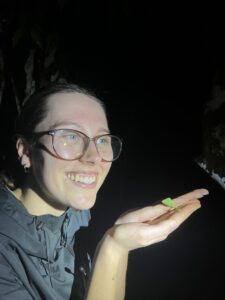
- Kirsten and a local snail small
-
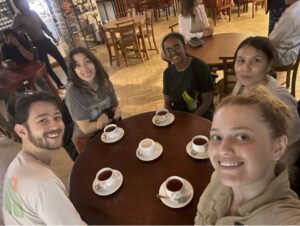
- tea time
-
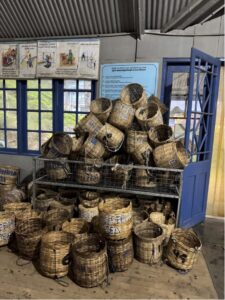
- tea licking backpacks
-
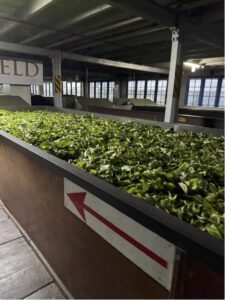
- tea leaf drying conveyer
-
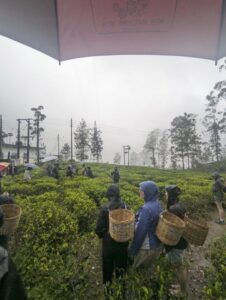
- Picking tea
-
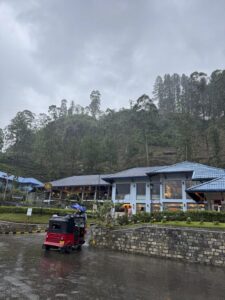
- Bluefield Plantation Centre
-
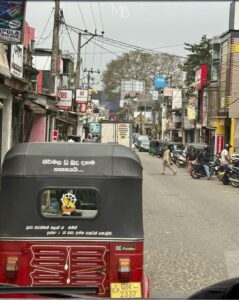
- view of road in small town with tuktuk in foreground
-
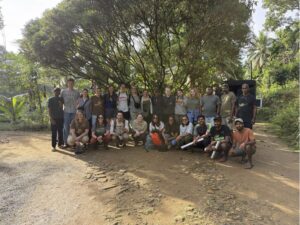
- Class wirth Runakanda staff before our departure
We love these blogs and photos! They are so descriptive that we can almost imagine what it is like to be there with you, while we are all snowed in back home.