February 28 to March 2 2026. Altered circumstances

Josh Kowal et al.

What is remarkable about the power of the internet is the ability for everyone in the world to recieve exactly the same information at the same time. Despite the instantaneous spread, how that information is interpreted by news outlets and ultimatly the many readers worldwide could not be more different. For us in Doha, we want to know what this information will mean for the airspace above us and our safety or ability to get home. Governments and news outlets want to tell a story, a narrative of events that picks through our lived experiences, and replaying only the most news worthy moments upon televisions sets disconnected from the reality happening half a world away. We are forced to care about the geopolitics or the opinions of orange men who are only seeking a short-sighted outcome ignoring the impacts their actions have upon the lives of regular people.

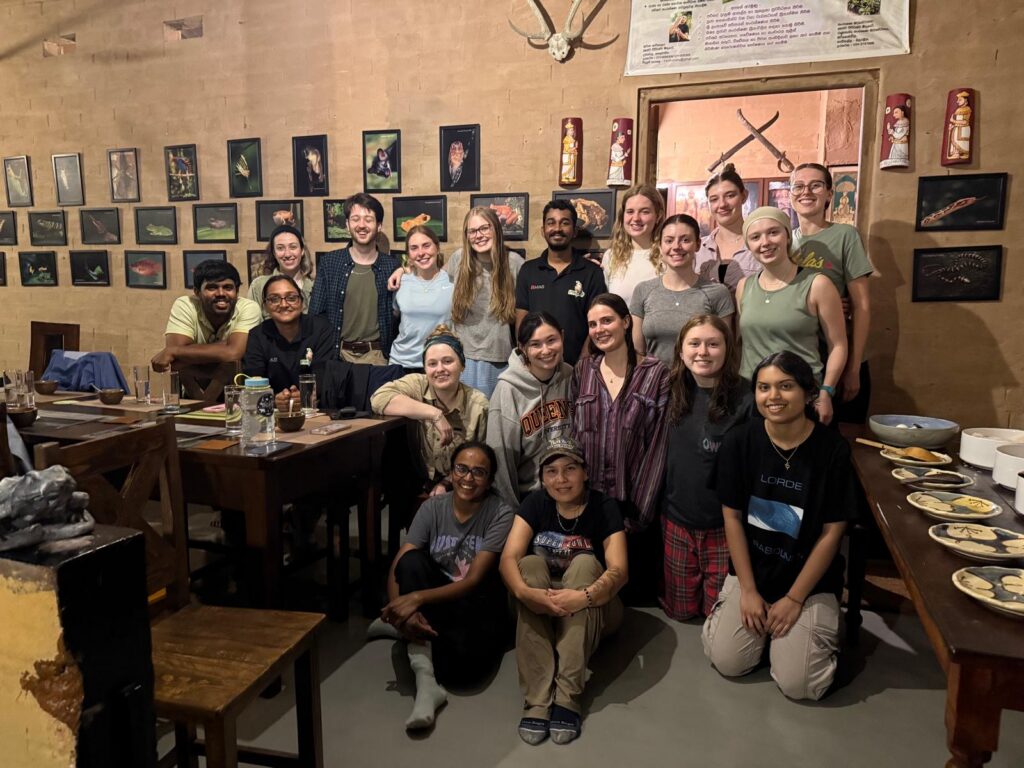
Tonight, the sun is setting on the third day of the second more unexpected leg of our journey. So here’s our play by play since February 27th at 10:45 pm when we left the curiously Scottish Seuarts &Co restaurant in Colombo come in to: 24 hours waiting in lines, many strolls around the airport forest, 3 hours in an airport lounge, 2-3 showers, 6 stellar meals at a 5 star hotel restaurant, and a shopping outing expressly for more underwear. Most importantly, the entirety of yesterday was a chance to not only catch up on sleep from the last 48 hours of travel but also from the last 2 weeks of our course.

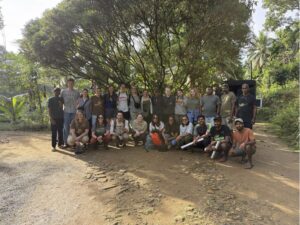
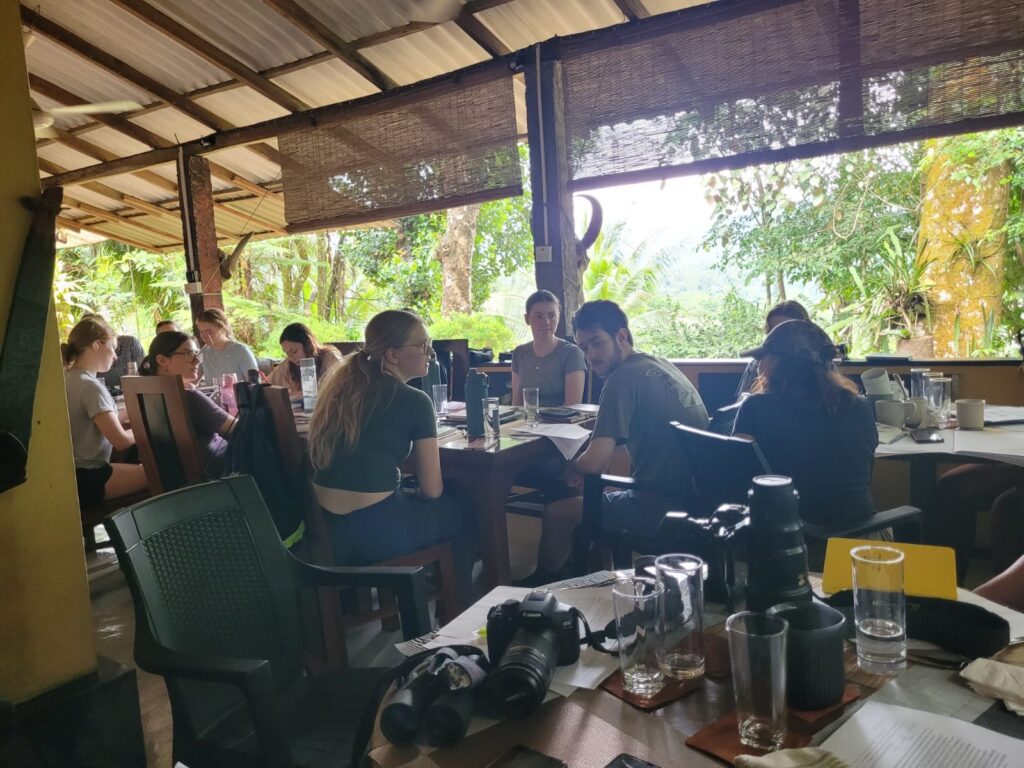
The flight to Doha, Qatar was uneventful, with our sleepy check-in attendant causing us the most grief. Between yawns she would ask to weigh our carry on bags forcing us to frivolously shuffle items between us until we all met the posted maximum weight. Arriving in Qatar, reintroduced us to the building that would unbeknownst to us become our home for the next 24 hours.Approximately an hour after departing the Doha Airport, our captain came on the intercom explaining that airspace was closed and we would be promptly returning Doha. Quickly, information of what was happening became accessible via our complimentary StarLink connection and a rapid decent landing at 11:30am brought our group of 17 back to the same terminal we left from. With brave faces the Qatar Airways staff led us to a central area in which we settled in to wait for more information. We set up our space among the benches, ‘NewSteveLand’ we called it. With our phones charging and ears peeled for more information from the staff, we refreshed our phones for live news updates in the meantime. The Qatar Airways staff maintained an impressively level headed demeanor answering travelers questions to the best of their ability. Meal vouchers began to be issued and eventually they told us that only our boarding passes were needed for the promise of a meal in the food court. There were a few options but the best one people pointed out was humbly called ‘Burger’ or something to that effect. They sure knew what they were talking about because damn that was a good burger!

It became clear that leaving the airport would require: a hotel voucher and an approved visa. Long lines were formed and passport information was shared but it was clear that this ordeal was going to take quite some time. In shifts we waited for the call of our names, we strained our ears to hear the quiet voices of attendants over the rumble of growing irateness from the crowd. The hours continued to pass by and for our families in Canada morning had come, spelling the first time we could call our dear parents and reassure each other that all would be okay.

9:30pm, we were told that at this time we would not be getting hotel accommodations. The Qatar Airways hospitality team offered to move us to the much more comfortable Maha Lounge. This oasis was truly a sight for tired eyes and boy were our eyes tired. Dreamy couches with plush seats, free food and private showers helped eased the pits in our stomachs. Let me tell you that was one of the most refreshing showers I have had in a long time. Claire Haffner even treated Global News with a short interview about our experiences so far. Like cats we curled up in our seats for the chance at sleep.

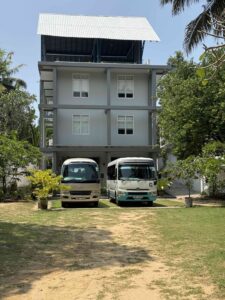
March 1st 1am, we were awoken back to our feet, along with packing we stuffed muffins and water bottles into our pockets. This tired group of 17 was herded from the lounge to a gate where a hand written voucher to the Pullman Hotel was prescribed. Most relieving to learn was that despite our groups size we would all be assigned to the same accommodations, however; getting there would take the next five and a half hours most of which was spent in a line with hundreds of other travelers. In this line we formed ‘NewNewSteveLand’ where in what can only be described as a people puddle we slept upon our packed backpacks (and unfortunately the muffins in our pockets) for support. Finally, we reached the front and were reassigned to buses destined not for the already packed Pullman hotel. The ride on the buses was surreal, we along with thousands of other travelers had entered a country we had never intended to visit. The downtown of Doha literally towers over everything with seemingly not a building shorter than 15 stories. Of course the tourist instincts we had honed during our time in Sri Lanka took over, forcing us to admire these sights even snapping photos of the most interesting landmarks to send back to our anxious parents.
6:30am, though we had made it to the hotel the reality of what was going on around us was inescapable and the booms of missile interceptions could be heard high above us. In this moment we were most thankful we had each other. Staff here were incredibly sympathetic providing water and explaining that after dropping our things in our rooms we would find a warm breakfast buffet on the first floor.

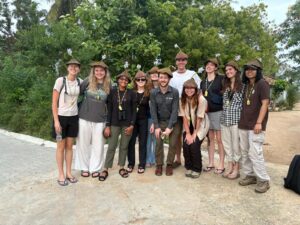
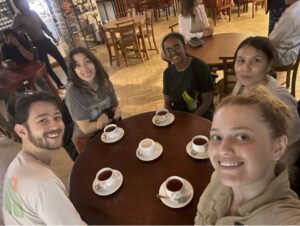
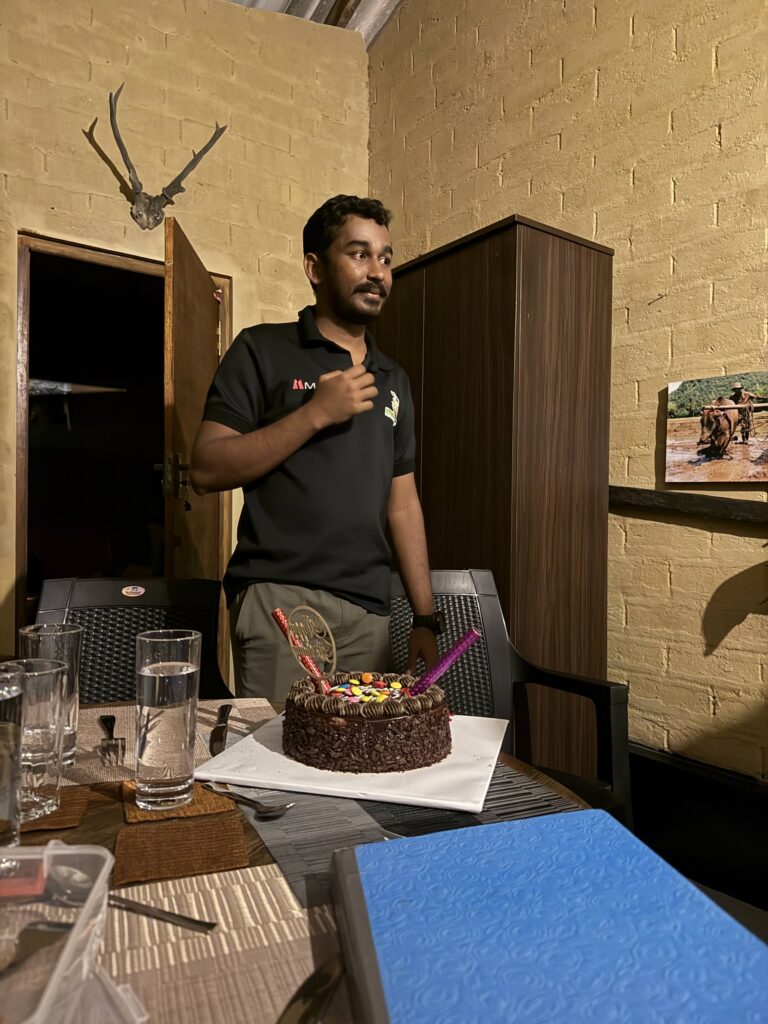
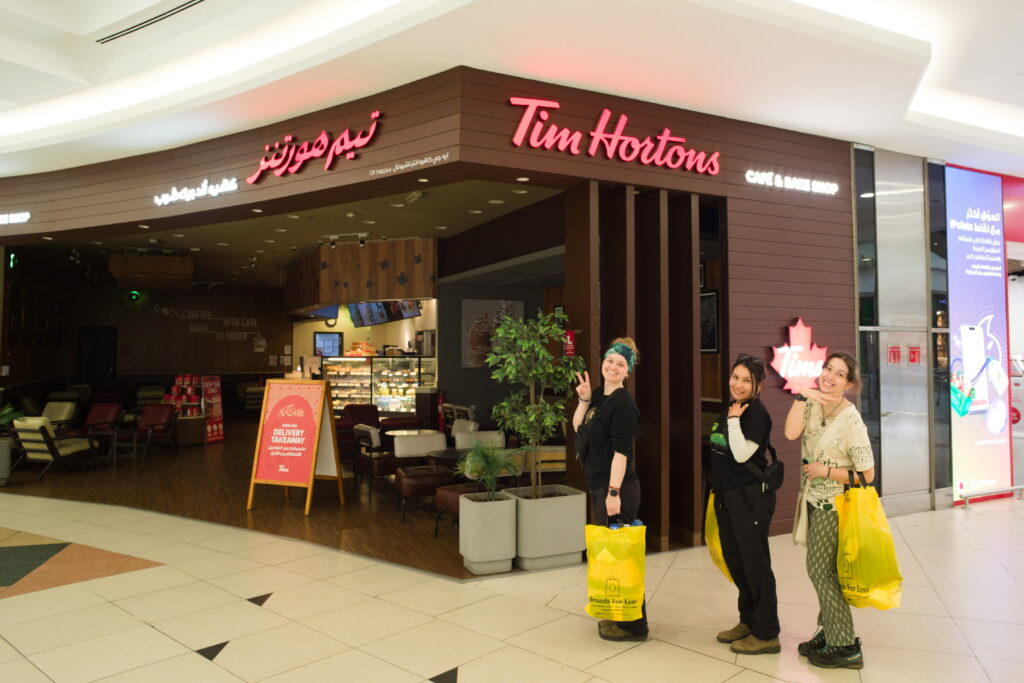
Monday March 2nd 9:00am, after checking in yesterday sleep came quickly, the beds here are leagues above what the airport had to offer. Apart form waking for meals and a couple games of cards organized by Vanessa and Aili most of us slept have slept for almost 24 hours stright. Catching up on the sleep deficit accumulated during our adventures in Sir Lanka. Yesterday, in the interest of a quick and unhindered exit we chose to leave our checked bags in the care of the airport thus, creating our next most pressing issue: the need more more undergarments. With my fellow grad students Meg, Andy and Victoria we embarked upon a small expedition to a local mall which we knew to be home to stores such as ‘Brands for Less’ (similar to Winners) and ‘Carrefour’ (similar to Loblaws back home). On top of everything else we are here during Ramadan, a time of celebration and fasting for muslim people. If there was no conflict, visiting now would be an ideal time to experience the muslim culture! The 20 minute walk to the mall was mostly along a wide 3 lane boulevard surrounded by well watered hedges and trees. We couldn’t help but get some bird watching in as we noticed Common mynas and White-eared bulbuls inhabiting this stretch of road. We also couldn’t help but notice the trees in a park on our walk to the mall were labeled with their species name. Our inner biology nerds were ecstatic. As with everything we have thus far experienced in this country this mall found a way to elevate all the sights you might expect: a grand atrium opening up to four stories of shopping, with ornate decorations encrusting a dome of glass, all surround an expansive children’s play apparatus. Every store was open but some were busier than others with shoppers favoring a hunt for the essentials. We browsed the racks of ‘Brands For Less’ selecting many sets of undergarments for the group, for ourselves we chose a couple new shirts and I even chose a fancy new pair of purple crocs! Along with tums for Steve the Carrefour sold an arrangement of shirts aimed at tourists with the words ‘Doha Qatar’, these we of course bought to commemorate the sudden experience we have had so far. Due to Ramadan all the restaurants and coffee shops we passed within the mall are closed apart from one, Tim Hortons of course. Before leaving the mall we all picked up a taste of home, but by law our coffees had to be covered with paper bags until we returned to our hotel. Our group of 17 ended the day with a surprise birthday party for Alex Bandt. During a second outing to the mall birthday essentials such as candles and balloons were gathered by Aili, Claire, Alex Beer, and Vennila ensuring this was a special event. Even room service happily provided a chocolate brownie to help us celebrate!
Friday February 27 2026. Homeward bound

Written by Dilini.

After 10 wonderful days travelling around Sri Lanka, it was finally time to end our academic tour and depart Sri Lanka. We started our final day with a frenzy of packing, then the two last article presentations by Induja and Kalindu. Next was one of our favourite activities – breakfast! with a buffet full of local food like coconut roti, milk rice, tea buns, crocodile buns, roast paan with several other side dishes and delicious Ceylon tea and coffee.

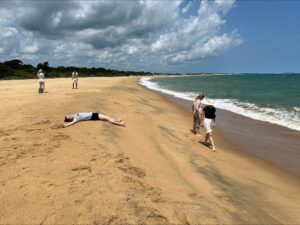
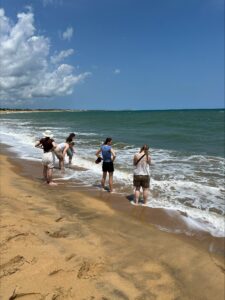
Following the breakfast, some of our students went to enjoy the sea breeze at the beach adjoining the hostel, while others completed packing their bags. An academic field course is never complete without a final test. Moving away from regular final paper, we held a quiz about Sri Lanka geography and biodiversity, where each group spent about 4 minutes at each of multiple stations answering the questions. Although students were not very happy with all the questions, they did very well in the end.

After loading our bags onto our buses, we left the 234 Weligama. On our way to Colombo, we stopped for lunch at Galle Fort. While everyone else was enjoying regular meals and drinks from the menu, Olin, Aili, Induja, and Ravindi decided to build their own dishes mixing different food and drinks that they ordered – fusion-fusion cuisine. After the delicious lunch, we all walked along the fort wall enjoying the scenery of the attractive Galle beach, some buying coffee and others baked goods from a tuk-tuk bakery. We took a modern toll highway most of the way to Colombo arriving at dusk.

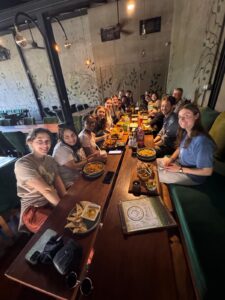
In Colombo we stopped at the Laksala Souvenir Shop. Most students spent their remaining rupees buying gifts for friends and loved ones back home. Some of us had hard time deciding which item to buy as there were myriad handmade items ranging from small keychains and fridge magnets to huge elephant carvings and traditional wooden masks plus a range of teas, coffees and spices. We stopped at the Independence Memorial Hall, a national monument in Sri Lanka built for the commemoration of the independence of Sri Lanka from British rule, Ravindi, Induja, and Kalindu gave all of us gifts to thank for the wonderful opportunity they had over the last 10 days. Then we headed to The Steuart by Citrus, to enjoy the farewell dinner organized by Ashan, our outfitter. We then drove to the Colombo Bandaranaike International Airport with heavy hearts and said our goodbyes to, Steve and our Canadian students departing for Toronto, and Dilini, Ravindi, Induja and Kalindu remaining behind and wishing all safe travels.


Thursday 26 February 2026. Mirissa pelagic tour

Normally, when one wakes up early in the morning—or at least for many of us university students—there is a bit of a sigh. It would just be so nice to stay in bed! On this field course, we’ve had a number of early mornings, each touched with a bit of exhaustion but largely filled with the excitement and promise of a hike through the Runakanda Forest Restoration Site or a safari through Yala. Today, there were the usual sighs and excitement, but it was also bittersweet. This was our last early morning in Sri Lanka.

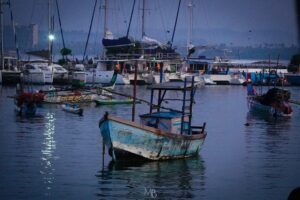
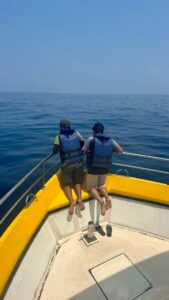
We soon pushed aside this reality to embrace the marine adventures to come. Arriving at the docks, we skirted past bikes and tuk-tuks, scrambling our way to the top deck of our boat. All around us, colourful, almost tie-dyed fishing boats in the Sri Lankan style lined the protected harbour—steep-bowed and sitting high in the water, waiting to be filled with their catch. The boats filled with tourists and, by 6:30, we were off.

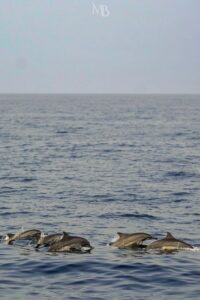
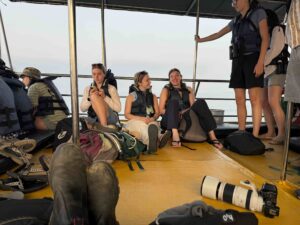
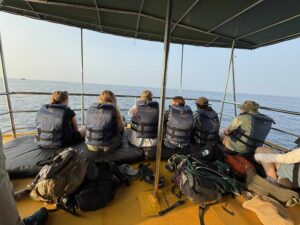
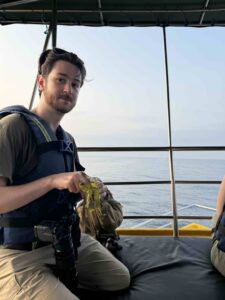
Despite the calm seas, a number of us had to endure the woes of seasickness—but it was all worth it as soon as we heard the call: “Bottlenose dolphins—three o’clock!” Everyone clambered to the starboard side of the vessel. It didn’t matter. Soon, the dolphins were dancing through our bow wake, manoeuvring in a display that proved difficult to capture, even for the most experienced photographers. Next came the smaller cousins of the bottlenose—the spinners—followed by Risso’s dolphins. The top-heavy boat swayed from side to side, listing toward whichever direction the dolphins emerged. Garry, an ornithologist living in Colombo, and his son Jude proved invaluable with their knowledge of the fauna all around us.

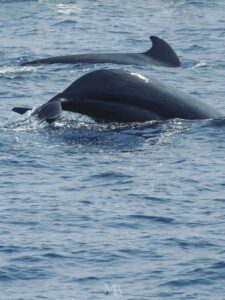
After we had passed Sri Lanka’s famous coastal shelf, we received the greatest treat: pilot whales. Our boat raced toward the call from nearby vessels. In the distance, they were manoeuvring separately, trying to catch a glimpse of these behemoths as thirty-odd whales dove for squid undertaking their daily vertical migration. We finally joined the party. For over 30 minutes, we watched as the pod resurfaced for air, caught their breath, and rolled into a dive—water streaming off their tails on the final descent. Then we would set our timers and keep watch until, ten minutes later, the pod emerged again. It was incredible.

By this point, we had been on the boat for nearly six hours, so it was time to head back. Some of us slept, some chatted about favourite mementos from the course, and some simply watched the horizon. But all were anticipating the final debate, prepared by yours truly: Meg, Olin, Rivindi, Hannah, and Claire. Some might say it was the highlight of the entire trip—though you may be hard-pressed to find them.

Four o’clock came around, and the fiery exchange came to an end. Beach time!
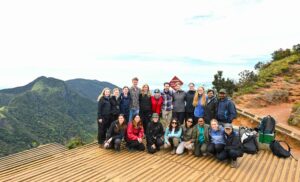
We all rushed to change into our swimsuits before boarding the buses and heading to Turtle Beach, hoping to snorkel alongside sea turtles. Unfortunately, our time underwater didn’t quite live up to the beach’s name, as the turtles had since moved on and we didn’t see any. We did, however, see coral restoration projects in action, attracting a variety of tropical fish and adding to the experience. We stayed in the water for over an hour before being gathered for a photo taken by another tourist who knew all the right angles.

We then said a sad goodbye to Turtle Beach before heading back to our hostel for one last dinner, where we shared stories and laughs from the day. We decided that this amazing course deserved a celebration, leading us to the restaurant next door for a few drinks and some time to hang out before heading to bed ahead of our long day of travel the next morning.

Wednesday 25 February 2026. Kataragama to Mirissa

Group D: Aili, Andy and Vanessa 
Today, we started our morning with a delicious breakfast followed by art and sketching.

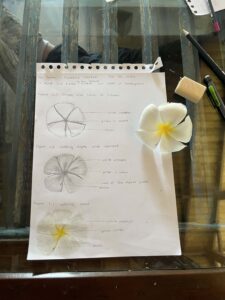
We did an art and sketching activity in the morning at 9am to practice our sketching and observational skills like many 19th century naturalists who did not have mobile phones; we also labeled our drawings.  We sketched flowers, leaves and coconuts including shape depth form and colour. Victoria selected a toad to draw.

Around 10 am, we load our suitcases and bags on the bus and started a new trip to a next destination:  Dr. Dilini Abeyrama’s house.

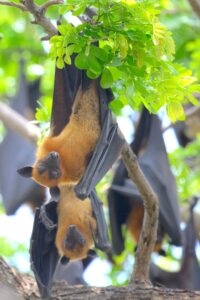
On our drive we stopped at a beautiful wetland named Tissa Lake, where we saw a massive colony of Indian flying foxes aka fruit bats!! (many 1000). There were so many …. After admiring them for a while and taking some pictures, we resumed our journey.
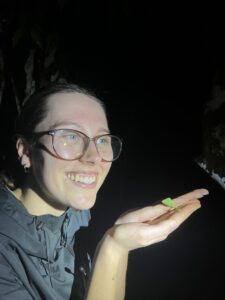
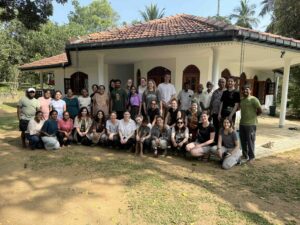
We got to our destination soon after. The students and Steve all had the pleasure of visiting with Dilini and her family. This was her first time back home in almost 4 years, which made the reunion with her family even more special.

The students also got a tour of her backyard and garden which includes many fruit veggies and spices and more that we would dream of having in Canada. Including two species of coconuts, wood apple, guava, cinnamon, avocado and more!

We all got to spend some quality time taking a break and drinking some king coconut water and eating the coconut jelly inside!

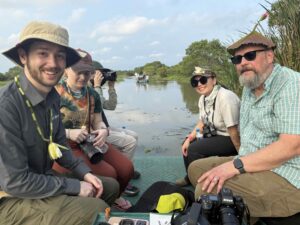
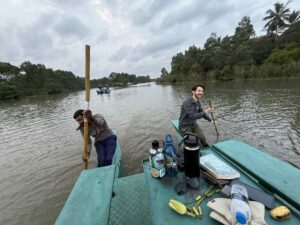
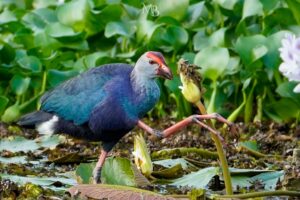
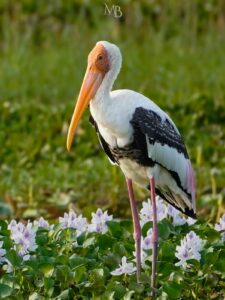
We departed and by 4:00 PM had arrived at the Kalametiya bird sanctuary specializing in bird watching and ecotourism. We went out on lagoon boats through the mangroves guided by Priyanka, Kumare, Pasindu, Sanka, Sameera, Chamie, and Mahinda. We climbed up on the rocks and it was a spectacular view. There were so many bird species and some of the most interesting were white-throated kingfishers, painted stork, red-vented bulbul, flame-backed woodpecker, and blue-faced malkoha. Our guides were so kind and made us water lily necklaces and lilli pad hats with the water Hyacinth’s at the top (except for Steve’s hat which had a mangrove blossom)! We took a break and had some bananas and Kokiss cookies.

It was a day of trying new things and coming home to familiar things!

We arrived at our hostel (234 Weligama) in Mirissa on the south coast of Sri Lanka at 8 PM and met Dr. Gary Allport (Bird Life International) and his son Jude (who has a passion for snakes). We ate dinner dinner with haste took some showers and finished our night off looking through the telescope on the beach. We saw the moon and Jupiter! Sweet dreams from Weligama Bay!

Tuesday February 24 2026. Yala National Park!

Group C: Victoria, Vennila, Ciara

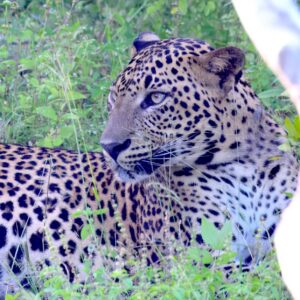
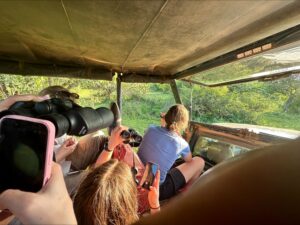
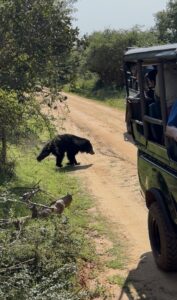
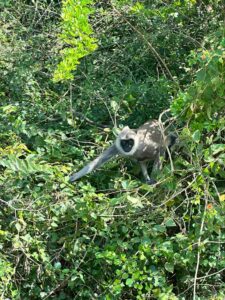
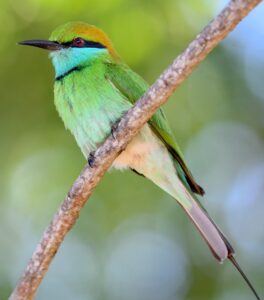
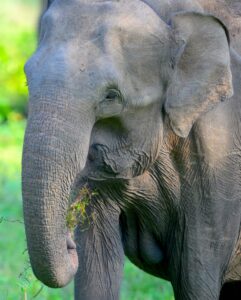
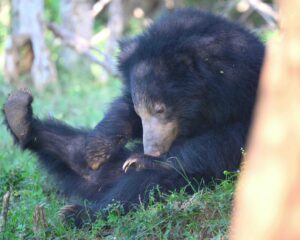
Started the day off with an early morning, leaving the Sunflower Hotel at around 5:30am. In three separate jeep-style vehicles we made our way to Yala National Park for a 6:30am safari starting at Katagamuwa gate. Along the extremely bumpy paths, our guides helped to point out many amazing wildlife, giving many of us our first look at many species in the wild (“lifers”). All groups got to see our first peeks at Sri Lankan Leopards Jerry and Lucas, who were asleep up trees by mid-morning. The first few Sri Lankan Elephants, the largest of the Asian Elephants, were spotted relatively early in the morning starting around 8:15am as well. These amazing animals were followed by a Sri Lankan Sloth Bear a rarer sighting, that crossed the road between a few of the vehicles, giving many of us an up-close view of the small bear. Between encounters of the “big three”, as many called the leopards, elephants, and sloth bears, we stopped for three species of brightly coloured bee-eaters (birds) positioned close and far from the vans, Water Buffalo and crocodiles wallowing in the muddy water, and Bengal Monitor lizards trying to catch as many rays as possible in the early morning sun. Peafowl were also a common sighting as we drove along enjoying the scenery, which included a large rock in the middle of the landscape aptly named Elephant Rock for its likeness to the creatures.  Throughout we caught glimpses of the many Spotted deer, Sambar deer, and Tufted Gray Monkeys (one eating from a bush) that also inhabit the park.

Just as the hottest part of the day began to roll around, we pulled into our rest-stop. The park closes between 12pm and 2pm, so this was the perfect time to have some cool drinks and our lunches from the canteen on location. The location was right on the water, and we had some free time to enjoy the view and the beach. There was also a small souvenir shop where we could pick up some of the essential Yala National Park merchandise to take home. Once 2:00pm came, we were back in our safari vehicles, ready for the second half of our day.

On our way out of the rest-stop, one of the guides spotted a large Brown Fish Owl, perched in the shade in a tree. We photographed it as it looked around lazily, seeming to judge our very existence. As one of the vehicles passed another large, but this time, very flat rock, and one of the guides informed the group that this rock was used for drying meat before the park was protected. In the last few hours, we managed another sighting of a sloth bear rubbing up against a tree, and then wandering into the trees, which caused some displeasure among some foreign guests in the jeeps behind us who didn’t get as clear of a sighting. We were able to see a pair of female elephants leading a baby elephant along the road, where one of three safari vehicles from our group experienced another up-close encounter before the elephants slipped into the trees. Our guides then tracked where the elephants were likely to go based on their path, and demonstrating their amazing understanding of the park, were correct. One elephant crossed the wetland through the water, while the other female went around with the baby, as it was too small to walk through the water. One guide gave the group even more detail, one of the females was the baby’s mother, while the other was a caretaker, which allows the mother to get enough food to feed the calf as it’s required 15 L of milk per day. Sri Lankan Elephant calves are born at 150-200 kg, so the amount of milk a baby would require is quite a bit more than your average human baby. After this final elephant sighting, we began our trek out of the park, only for our guides to get the call that one of the female leopards was awake and on the move a little way away. Our drivers got us there as hastily as possible where we luckily ended up at a prime location to watch “Lucas’ wife”, sitting on a bank and then saunter to a bush to lay back down. We sat there for quite a while, simply watching the majestic cat.

One of the trucks got an added bonus of spotting the infamous elephant, Gemunu, who is notorious for trying to steal food out of tourist vehicles. Another truck saw a tree full of Malabar Pied-Hornbills!

Despite our exhaustion, we gathered back at the hotel and ended the day with Group D’s debate on multinational treaties to reduce illegal trade.

Monday February 23 2026. Nuwara Eliya to Kataragama

Group B: Alexandria, Josh & Jade

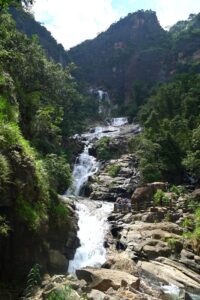
We slept in. We packed up the buses and left Nuwara Eliya at 10AM. Travelling through many winding roads, most of us observed the beautiful landscape while others were once again made a little carsick by the winding mountain roads. Lunch was waiting for us in a touristy town called Ella, where lots of recognizable items were on the menu. Continuing our journey, we stopped at Ravana waterfall along the edge of the highway. The waterfall is named after a mythical King from a well-known Sri Lankan legend.

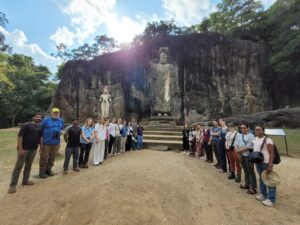
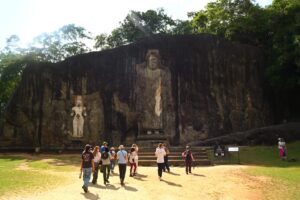
Our next stop was at the Buduruwagala Ancient archeological site carved in the 9th century. Before entering the site, we were given lotus flowers which in Buddhist culture serves as a reminder of the impermanence of all things. This site features the two branches of Buddhism: Theravada and Mahayana. The class was given a quick tour by the site guide. He shared with us that his family has being guiding in this spot for three generations. Buduruwagala means: Buddha images carved on stone. The carvings featured 7 Buddhas total, 3 on each side and the largest in the middle. He also showed us many images you could find created by the natural features of the rock such as a lion, the face of a women, and the rock its self is even in the shape of an elephant. Remnants of the white plaster and orange paint used to cover the granite remains. When we approached the buddha statue for the first time, we spread the petals of our lotus flowers and with a bow placed the flowers at an alter as an offering. As we left the site our guide showed us footprints left in the ground from a local elephant who roams the site. We ran into land and water monitors and took some time to observe and photograph Alexandrian Parakeets and an Indian Coocoos. Before hopping back on the bus some of us grabbed a refreshing soda or mango juice from the nearby restaurant.

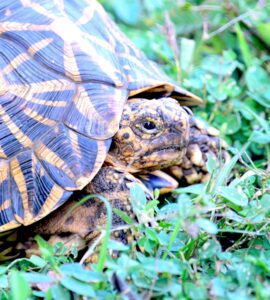
Back on the road, this time on a much straighter and flat highway, we headed through Wellawaya. The bus abruptly stopped as there was a star tortoise crossing the highway. Dilini ran out to move it to the shoulder and we waited patiently for the tortoises’ head to pop back out to get a good picture.

After a hot day of travel, we arrived at the Sunflower hotel in Katharagama and were greeted with a refreshing glass of watermelon juice. Many curious monkeys climbed around in the trees surrounding a courtyard pool. After swimming in the pool and settling in we met for two more article presentations. In the hotel common room Alex Brandt and Ravindi Menikrama gave their article presentations. Alex discussed the conservation of wildlife diversity in Agroforestry. Ravindi discussed local endemism between the Western Ghats and Sri Lanka.

With dusk approaching on this day of travel, many bats become active outside. After trying water buffalo milk curd with honey for dessert, we headed to bed to prepare for our early safari morning.


Sunday February 22 2026. Horton Plains National Park

Group A. Kirsten, Alex, Isabel

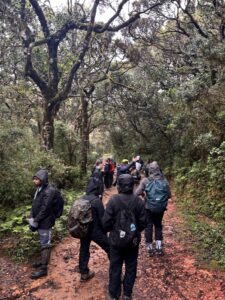
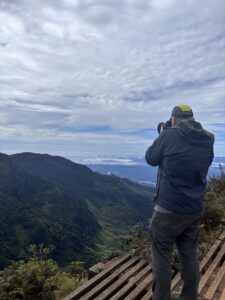
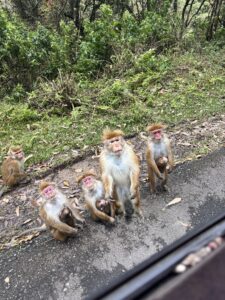
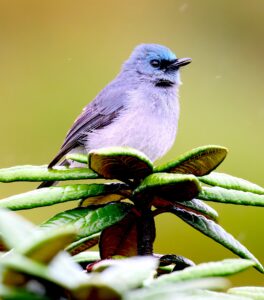
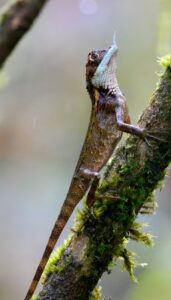
On February 23rd we started our day off nice and early at 4:30 am, with departure from the hotel at 5:15 am. We rose but I think we forgot to shine. The sky was dark and greeted us with a cool morning rain. With excitement for the day, we hoped into three vans as our typical buses would not suffice for our journey to Horton Plains national park. The majority of the ride was in darkness but the sun began to rise as we arrived at 6:30 am. The hotel staff were kind enough to pack us breakfast which we consumed before getting our tickets and bags checked. They don’t allow any plastic into the park except for plastic water bottles (as long as they have the label ripped off). Dilini explained to us that visitors tend to litter the labels throughout the park. I personally think that the no plastic rule should be adopted in our Canadian parks! We started our hike off at 7:30am and continued to mini worlds end. During our venture we were able to find 5 of the 8 species listed on the park information board. These included the Sri Lanka purple-faced langur, Rhinohorn lizard, Sri Lanka dull blue flycatcher, Sri Lanka yellow-eared bulbul and some of us were even lucky enough to spot the Sri Lanka whistling thrush among many other wonderful sightings. Also notably there were lots of pipits and we saw a pied buschat. When we got to mini worlds end we were in awe of the view that was presented before us. Valleys and hills full of lush vegetation, lakes and distant houses lit up the landscape. After snapping a few shots we all prepared to hike back to the buses. When driving out of the park we were greeted by a troop of toque macaques. Many of which were mothers carrying their young. Lunch was a mix of personal preferences prepared by Perera and Sons. Im not sure if it was the restaurant or the fact that we were very hungry but lunch tasted very good! Most of us enjoyed kottu, Mongolian rice or fried rice. With being just a short distance from the hotel we stopped at a cafe for some refreshments and continued on our return. The afternoon was filled with many insightful presentations. The first was a debate regarding debt for nature swaps and whether their effects are ecologically beneficial or simply greenwashing underlying concerns. Following this we listened to three seminars. We began with Meg who presented a seminar about how institutional pressures shape biodiversity management in Sri Lankan tea plantations, then Isabel who discussed the socioeconomics of biodiversity conservation in protected areas, and finally we ended with Josh who addressed the threats that oil-palm agriculture poses to biodiversity. After our academic evening we all rested and had a lovely dinner before heading up to pack our bags for our next journey!

Saturday 21 February 2026. Runakanda to Nuwara Eliya.

Group E. Meg, Hannah Smith, Claire, Olin

Waking up to our last morning at the Runakanda Rainforest Conservation Centre certainly felt bittersweet. The clouds glided overhead, obscuring the sun’s rays as they dove down to the peaks and valleys of Sinharaja Rainforest below. As the mist slowly cleared, and sun finally broke through, we were all enamoured by our last bites of fresh fruit with today’s special juice – papaya. It feels sad to say goodbye to some of the best mango many of us have ever tasted, but Dilini has assured us that there will be more to come. We think (and hope) she is right. But for now, we say goodbye to the wonderful staff at the conservation center and embark on our next adventure!

Of course, a nearly seven-hour drive sounds dreadful, but watching a country with new sights and experiences around every corner whiz by is certainly one of travel’s most underrated pleasures. Peeking out, women in vibrant, floral skirts worked the tea fields, dog basked in the sun, and peacocks strutted through rice paddies alongside cattle egrets, the foothills and mountains rising on the horizon. Children, old friends, monks, and police walked along the narrow shoulder of the road as our busses did the weave through rural towns and big cities. Many of us drifted in and out of sleep, tuk-tuks and produce stands passing by as we made our way to the highlands.

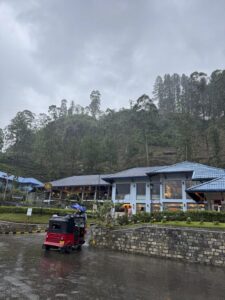
Soon, the road began to steadily climb and weave. Where once ferns dominated the forest floor, grasses and shrubs began to sprout, rice gave way to tea, and finally, it seemed we were in the mountains. A stop for lunch next to a river where locals splashed and bathed in the water, and we continued make our way into the clouds. Finally reaching our destination, Bluefield Tea Plantation.

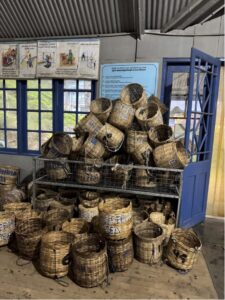
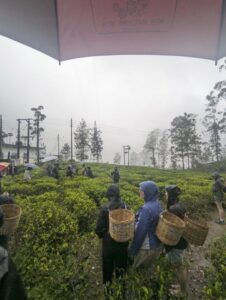
We met with our tour guide named Dahami, who told us fun facts about tea making, like how each day 150 workers who go out into the field have a quota of 20 kg of tea leaves, our buckets could hold a maximum of 2 kg…we weren’t even close. In our defense, we were picking in torrential downpour. She showed us how when picking, it needs to be the bud and two leaves, and they need to be lime green as the darker green leaves are bitter. We also learned that they grow leaves for black, green and white tea, but only process the black tea onsite. This is because green tea has machinery limitations and the local weather is not suitable for white tea.

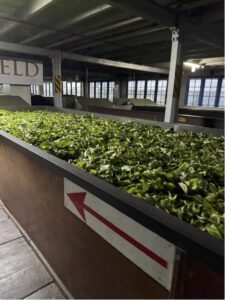
Dahami then toured us around the factory, explaining the process tea leaves must go through to make the beverages Sri Lanka is famous for. The method of processing tea leaves has not changed much over that past several hundred years; there was even a leaf drying machine in operation that was almost 110 years old and came all the way from Belfast, Ireland!

After the tour, we got to finally try some English breakfast black tea, which enticed many of us to buy some boxes to bring back to friends and family (and ourselves) in Canada. After purchasing different types of tea, we ran back to our vans through the rain for the final 1-hour stretch of our journey to our hostel in Nuwara Eliya where we got settled in, ate a delicious dinner, and went to bed.

Friday February 20th 2026. Last full day at the Runakanda Rain Forest Conservation Centre

Group D: Aili, Vanessa and Andy

Today was a very special day for one of our peers, Induja turned 26!

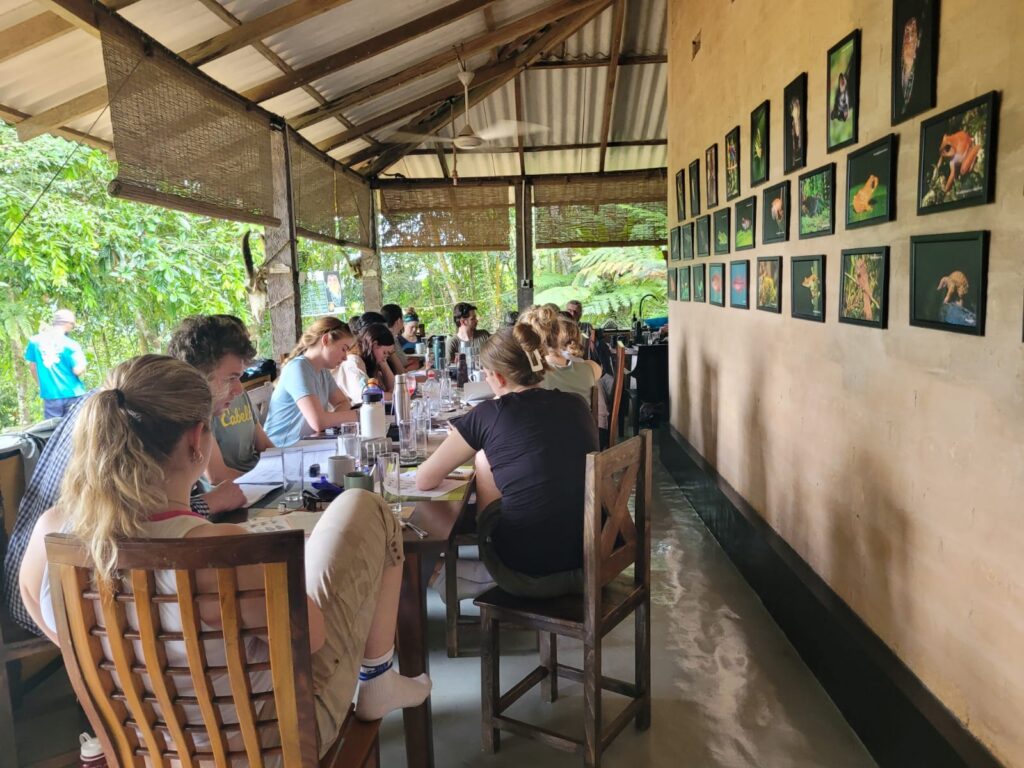
To kick off his favorite birthday yet, we gathered at 7:45 a.m. for a bird lesson with Dr. Lougheed. We learned how to identify birds by looking at bill morphology, feet, plumage, color, vocalization, habitat, and behavior. After 30 minutes of lecture, we were ready for the birdathon.

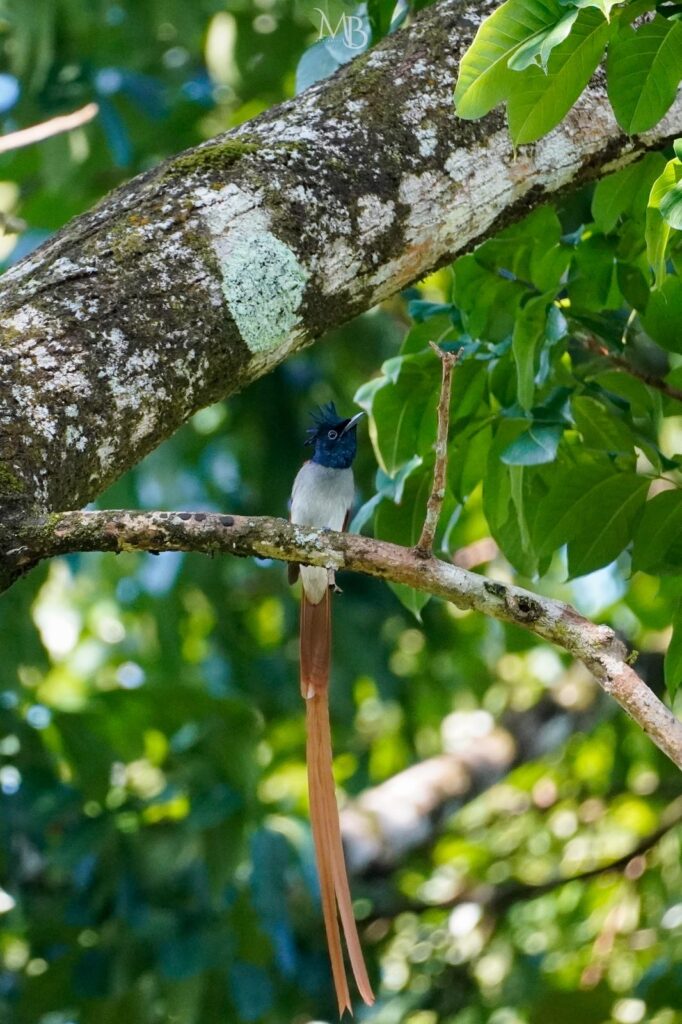
Our team; Aili the spotter, Vanessa the tracker, and Andy the identifier. We found a great spot next to Dr. Lougheed’s cabin. There, we spotted three Sri Lanka green pigeon and a beautiful Indian paradise flycatcher, which was Vanessa’s favorite. After spending a couple of minutes admiring them, we moved on to look for more birds. While searching, we got distracted by a cool green lizard resting on top of a pink flower. Ten minutes later, we remembered it was a competition and that we were supposed to be focusing on a completely different taxon. Unfortunately, it was too late… spoiler alert, we lost.

At 9:30 a.m., after some rewarding birding around the grounds of the Runakanda Rainforest Conservation Centre(RRCC), our team gathered in the dining room for breakfast. Once the plates were cleared, we went around in order and shared the number of species each group identified, along with our three favorite findings. The birdathon winners were Group Alex, Kirsten, Izzy, and birthday boy Induja. Their favorite finding of the birdathon was the Oriental honey buzzard!

For the rest of the morning and afternoon, we sat in on seminar presentations and one debate. First, Ciara discussed the potential impacts of climate change on reptiles in the tropics, based on a meta-analysis published in Frontiers in Ecology and Evolution. She highlighted potential impacts on embryonic development and physiology, including changes in precipitation, salinity, and temperature. Rising temperatures, rising sea levels, and altered precipitation patterns may negatively impact endemic reptile species in Sri Lanka, resulting in habitat loss, physiological heat stress, changes in embryonic development, and shifts in species distribution.

Sequentially, we continued our “seminarathon” with Jade, who presented on the importance of understanding how changes in land-use systems from smallholder farms to more commercial monocultures directly impact biodiversity in Southeast Asia.

Next, we heard from Alexandria, who discussed the vulnerability of endemic vertebrates in Sri Lanka due to climate change. From her talk, we learned that most species distributions in Sri Lanka will be affected by climate change, particularly reptiles, amphibians, and highland species. These groups are especially vulnerable to the “nowhere to go” hypothesis, which may lead to species loss.

Our final seminar speaker of the day was Victoria at 4:30 p.m. She brought us back to appreciate the study of biogeography and paleontology through an article from Proceedings of the National Academy of Sciences (PNAS). From Victoria, we learned that forest mosaics persisted across the region during the Last Glacial Maximum, and that transitions between vegetation types were smooth rather than abrupt.

At 6:45 p.m., we gathered for an insightful and heated debate from Group B: Josh, Alexandria, and Jade, who argued whether trophy hunting is an effective tool for conservation. This debate rocked worlds and changed minds; by the end, the polls had shifted!

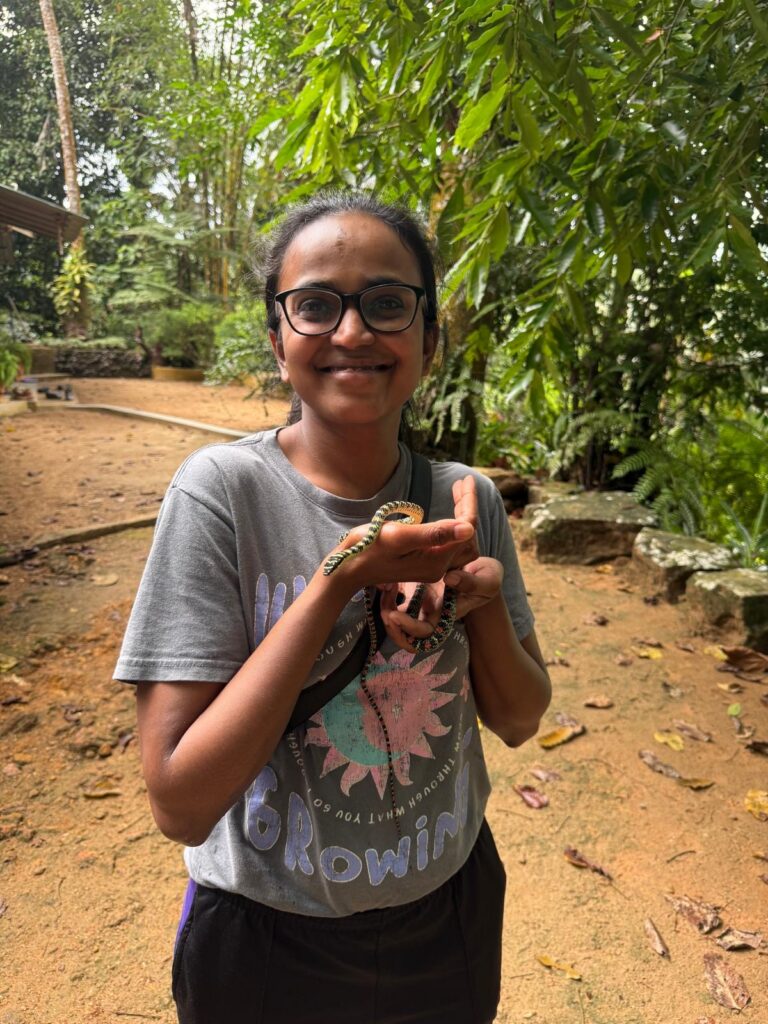
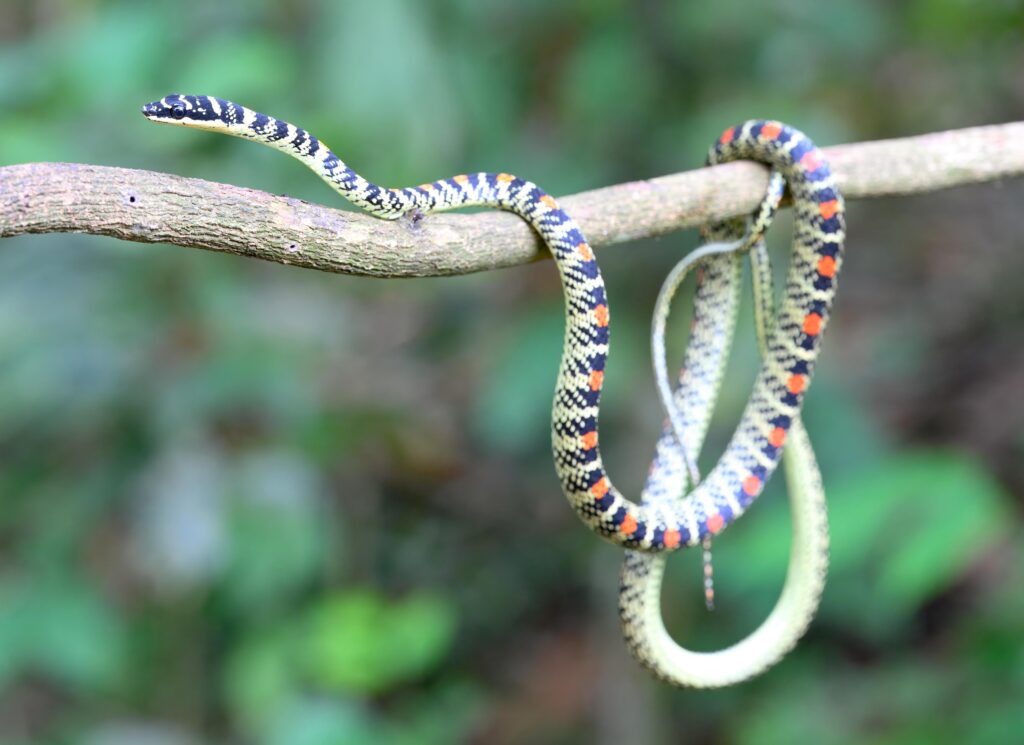
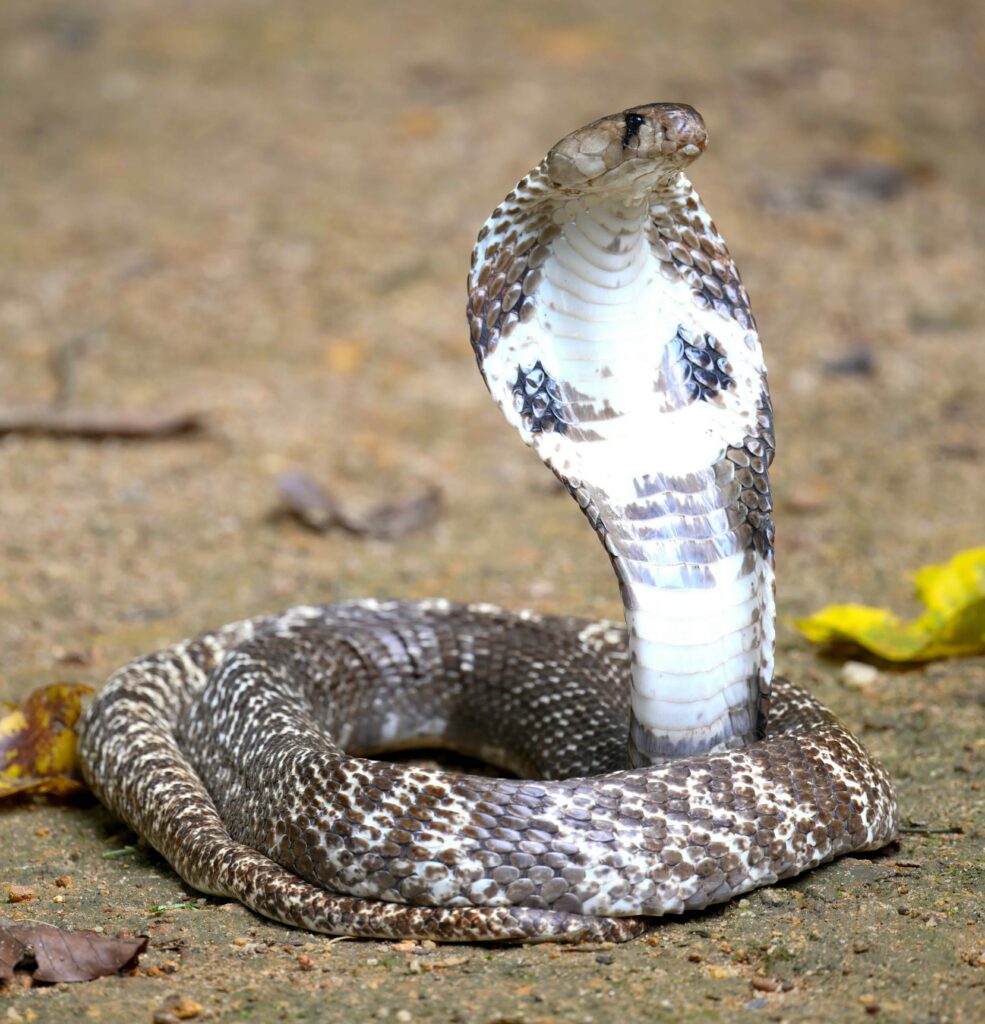
Throughout the seminars and debate, we took tea, meal, stretch, and snake breaks. During our snake breaks, we had the incredible opportunity to see and hold a golden flying snake, observe a very venomous Russell’s viper, and see another beautiful venomous creature, the Indian cobra with our own eyes and, more importantly, our camera lenses. Don’t worry parents, we didn’t hold the venomous ones!

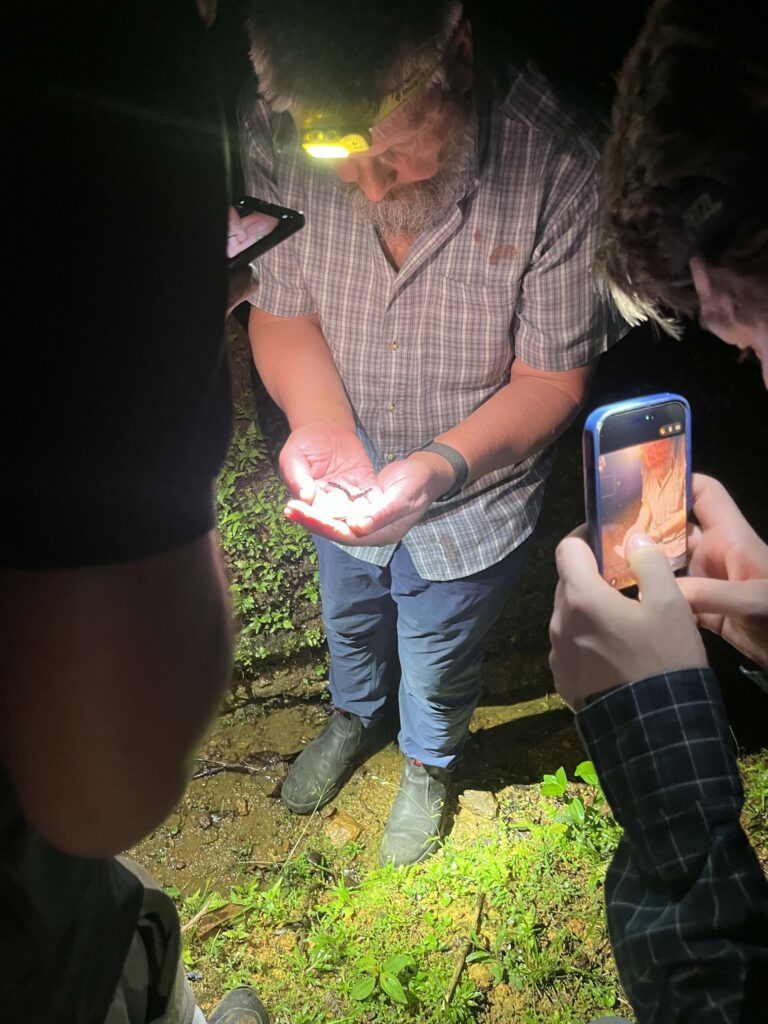
Before dinner, we gathered at the RRFCC for our final herping expedition in the Sinharaja Forest Reserve of the trip, and this time everyone was in attendance. No lorises and no leaf-nosed lizards, unfortunately 🙁 But we did see a Lesser yellow-banded caecilian (Ichthyophis pseudangularis). Caecilian fall within the Amphibian order Gymnophiona, one of the three extant amphibian groups – the others are Anura (frogs and toads) and Urodela (salamanders). Very cool to see and we found both adult (here) and juveniles.

But life is always good when you’re herping in Sri Lanka because we still saw so much cool stuff! Notably, we found a caecilian, a ton of green garden lizards, a ton of frogs, and a wolf snake.

To wrap up the day, we celebrated Induja’s 26th birthday, his best birthday yet with cake and a second joyful round of “Happy Birthday,” ending a long, exciting, academic heavy day.


Thursday, February 19 2026. Runakanda Rain Forest Conservation Reserve

Group C. Victoria, Ciara, Vennila

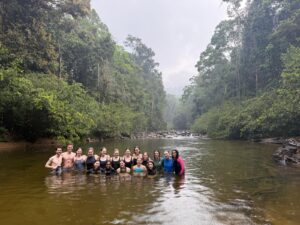
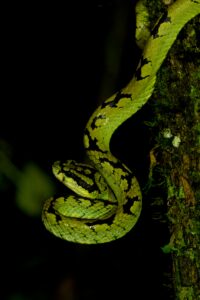
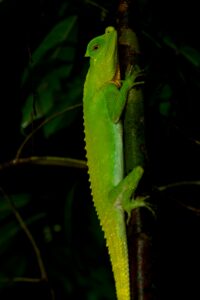
We started the day with the opportunity to see a Sri Lanka Bay owl, which was caught overnight by Sampath, Kalindu and Induja. We had some fresh Sri Lankan tea to fuel our early start (6:30am), before heading out to do some mist netting. We used different bird species sounds, played through a speaker, and also an owl call (as small birds do alarm calls and come close to the putative predator) to attract any birds towards the net. We caught a beautiful black-capped bulbul, which many of us got to hold. Afterwards, we headed back to the Runakanda Rain Forest Conservation Center for breakfast, where many of tried pineapple jam for the first time. Right after breakfast, we headed to the restoration site and climbed to the summit where the locals helped us to plant native trees. We had a very quick return to the centre to get changed, before we left once again for a much-needed swim at Maguru River. Our path to the swim site was rugged, with hiking across a river and over fallen trees, all while trying to avoid (unsuccesfully) the persistent land leeches. We split paths with Sampath and his colleagues when they found a Sri Lanka frogmouth nest, and went to set up a camera trap to monitor it for the months to come. Once we arrived to the river, we hopped in for a swim, and shortly after it started raining. The rain was very refreshing but left all of our stuff soaking wet!  On the way back, some of us got to see and smell cinnamon trees, then returned to the centre for lunch at 5:30pm. After lunch we got some time to rest (napping and working on our field books) until 7:15pm, then a group of us headed out (once again) for some evening herping in the Sinharaja rainforest after the rain. There were many amazing species spotted, including several species of shrub frogs, a green vine snake, a Sri Lanka kangaroo lizard, a Sri Lanka green pit viper, and a lyre head or hump-nosed lizard. We also got to see a red slender loris in its nest, apparently a very rare sight to see. Afterwards, we returned for the long-awaited dinner at 11pm, which was the traditional Sri Lankan dish, Kottu. That concluded our day, and we went to bed for a much-needed sleep after a long day of exploration.


« Older posts