Group D: Aili, Vanessa and Andy
Today was a very special day for one of our peers, Induja turned 26!
To kick off his favorite birthday yet, we gathered at 7:45 a.m. for a bird lesson with Dr. Lougheed. We learned how to identify birds by looking at bill morphology, feet, plumage, color, vocalization, habitat, and behavior. After 30 minutes of lecture, we were ready for the birdathon.
Our team; Aili the spotter, Vanessa the tracker, and Andy the identifier. We found a great spot next to Dr. Lougheed’s cabin. There, we spotted three Sri Lanka green pigeon and a beautiful Indian paradise flycatcher, which was Vanessa’s favorite. After spending a couple of minutes admiring them, we moved on to look for more birds. While searching, we got distracted by a cool green lizard resting on top of a pink flower. Ten minutes later, we remembered it was a competition and that we were supposed to be focusing on a completely different taxon. Unfortunately, it was too late… spoiler alert, we lost.
At 9:30 a.m., after some rewarding birding around the grounds of the Runakanda Rainforest Conservation Centre(RRCC), our team gathered in the dining room for breakfast. Once the plates were cleared, we went around in order and shared the number of species each group identified, along with our three favorite findings. The birdathon winners were Group Alex, Kirsten, Izzy, and birthday boy Induja. Their favorite finding of the birdathon was the Oriental honey buzzard!
For the rest of the morning and afternoon, we sat in on seminar presentations and one debate. First, Ciara discussed the potential impacts of climate change on reptiles in the tropics, based on a meta-analysis published in Frontiers in Ecology and Evolution. She highlighted potential impacts on embryonic development and physiology, including changes in precipitation, salinity, and temperature. Rising temperatures, rising sea levels, and altered precipitation patterns may negatively impact endemic reptile species in Sri Lanka, resulting in habitat loss, physiological heat stress, changes in embryonic development, and shifts in species distribution.
Sequentially, we continued our “seminarathon” with Jade, who presented on the importance of understanding how changes in land-use systems from smallholder farms to more commercial monocultures directly impact biodiversity in Southeast Asia.
Next, we heard from Alexandria, who discussed the vulnerability of endemic vertebrates in Sri Lanka due to climate change. From her talk, we learned that most species distributions in Sri Lanka will be affected by climate change, particularly reptiles, amphibians, and highland species. These groups are especially vulnerable to the “nowhere to go” hypothesis, which may lead to species loss.
Our final seminar speaker of the day was Victoria at 4:30 p.m. She brought us back to appreciate the study of biogeography and paleontology through an article from Proceedings of the National Academy of Sciences (PNAS). From Victoria, we learned that forest mosaics persisted across the region during the Last Glacial Maximum, and that transitions between vegetation types were smooth rather than abrupt.
At 6:45 p.m., we gathered for an insightful and heated debate from Group B: Josh, Alexandria, and Jade, who argued whether trophy hunting is an effective tool for conservation. This debate rocked worlds and changed minds; by the end, the polls had shifted!
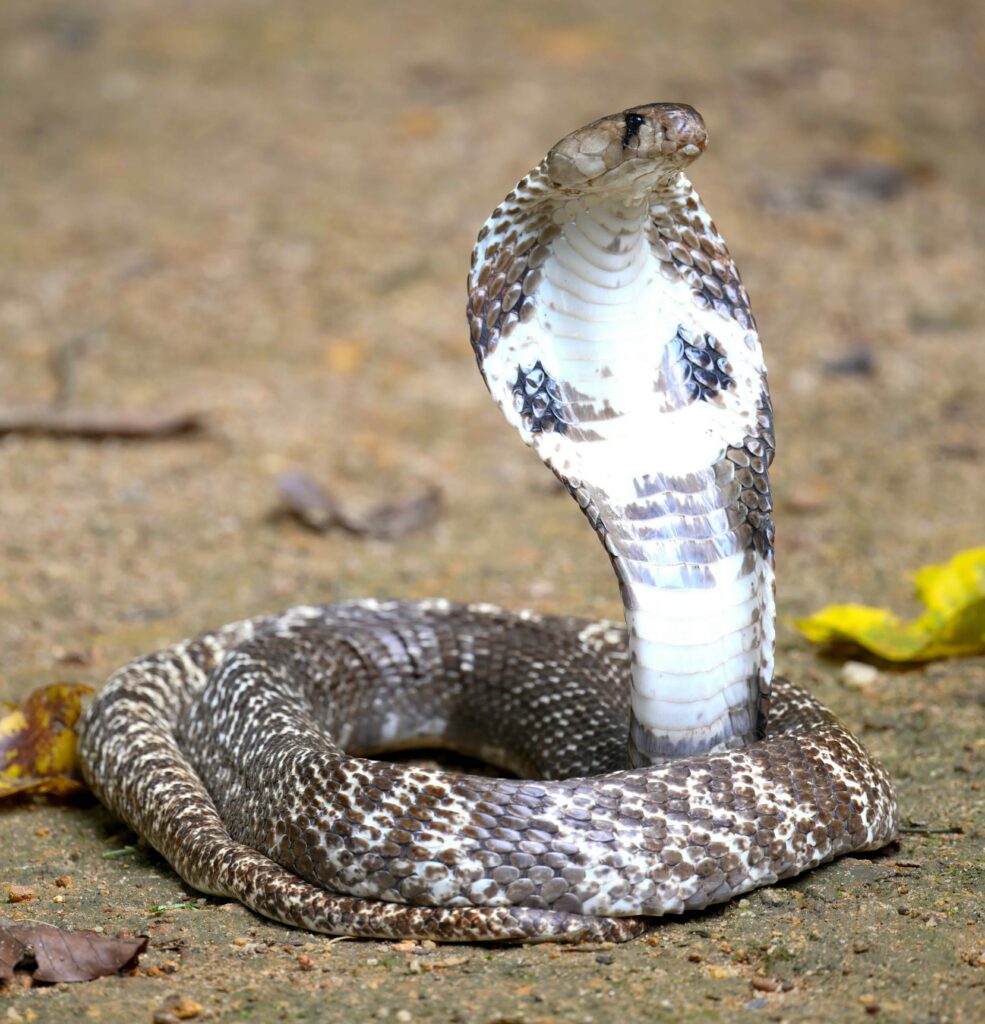
Throughout the seminars and debate, we took tea, meal, stretch, and snake breaks. During our snake breaks, we had the incredible opportunity to see and hold a golden flying snake, observe a very venomous Russell’s viper, and see another beautiful venomous creature, the Indian cobra with our own eyes and, more importantly, our camera lenses. Don’t worry parents, we didn’t hold the venomous ones!
Before dinner, we gathered at the RRFCC for our final herping expedition in the Sinharaja Forest Reserve of the trip, and this time everyone was in attendance. No lorises and no leaf-nosed lizards, unfortunately 🙁 But we did see a Lesser yellow-banded caecilian (Ichthyophis pseudangularis). Caecilian fall within the Amphibian order Gymnophiona, one of the three extant amphibian groups – the others are Anura (frogs and toads) and Urodela (salamanders). Very cool to see and we found both adult (here) and juveniles.
But life is always good when you’re herping in Sri Lanka because we still saw so much cool stuff! Notably, we found a caecilian, a ton of green garden lizards, a ton of frogs, and a wolf snake.
To wrap up the day, we celebrated Induja’s 26th birthday, his best birthday yet with cake and a second joyful round of “Happy Birthday,” ending a long, exciting, academic heavy day.
-
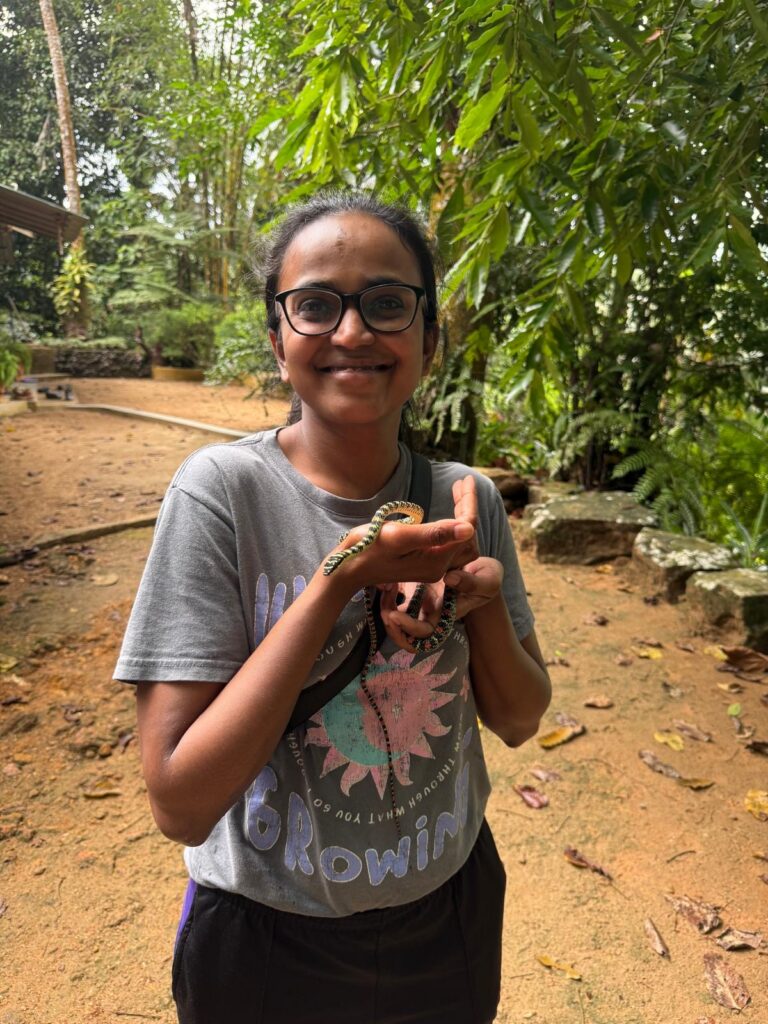
- Dilini with flying snake
-
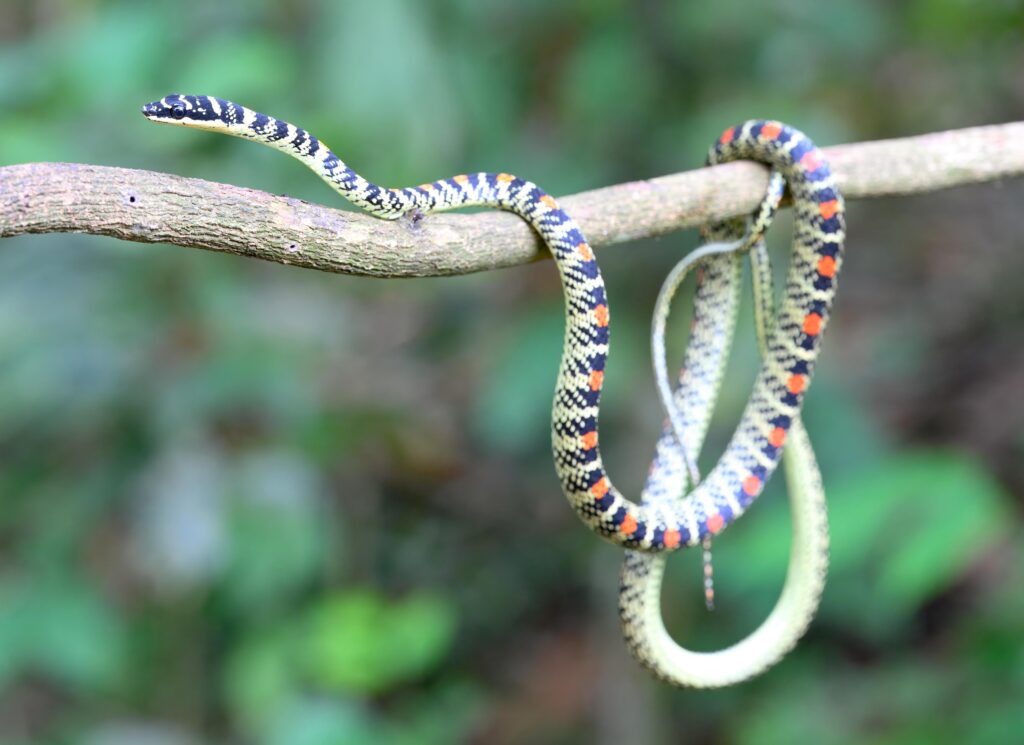
- ornate flying snake
-
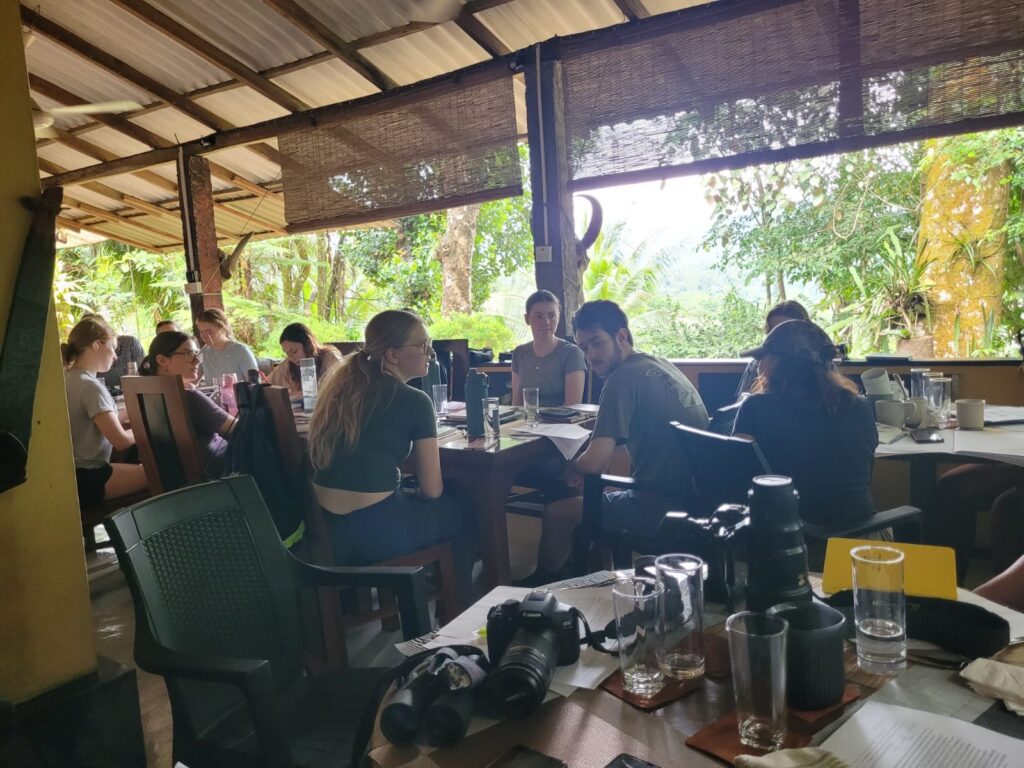
- class
-
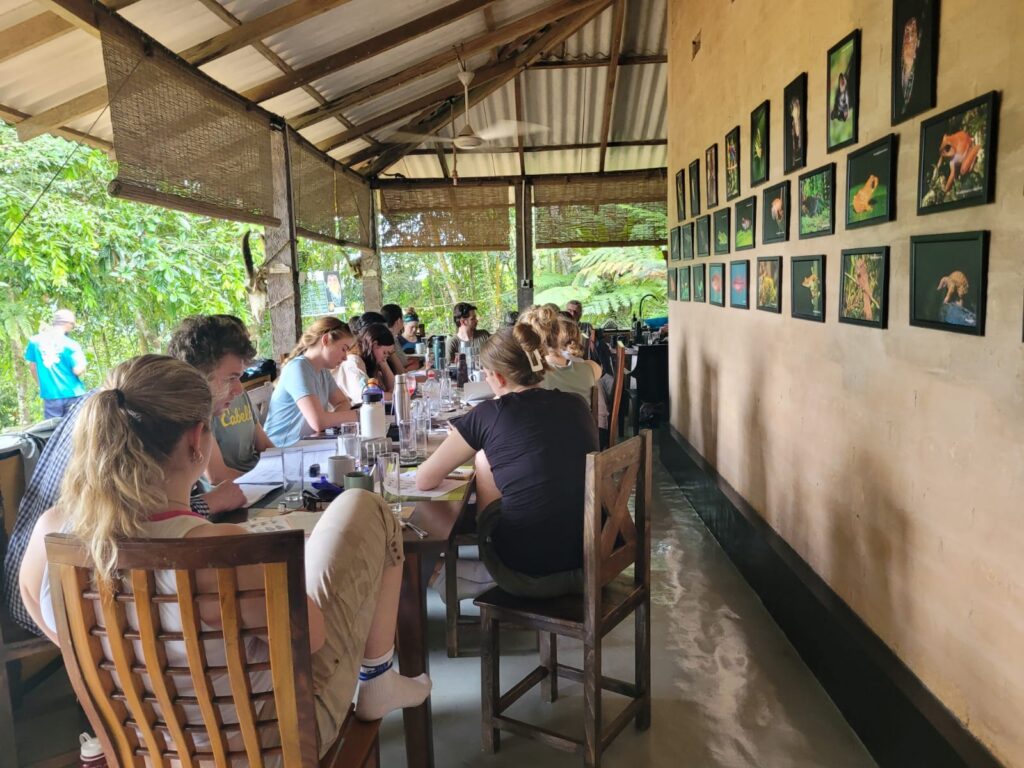
- class
-
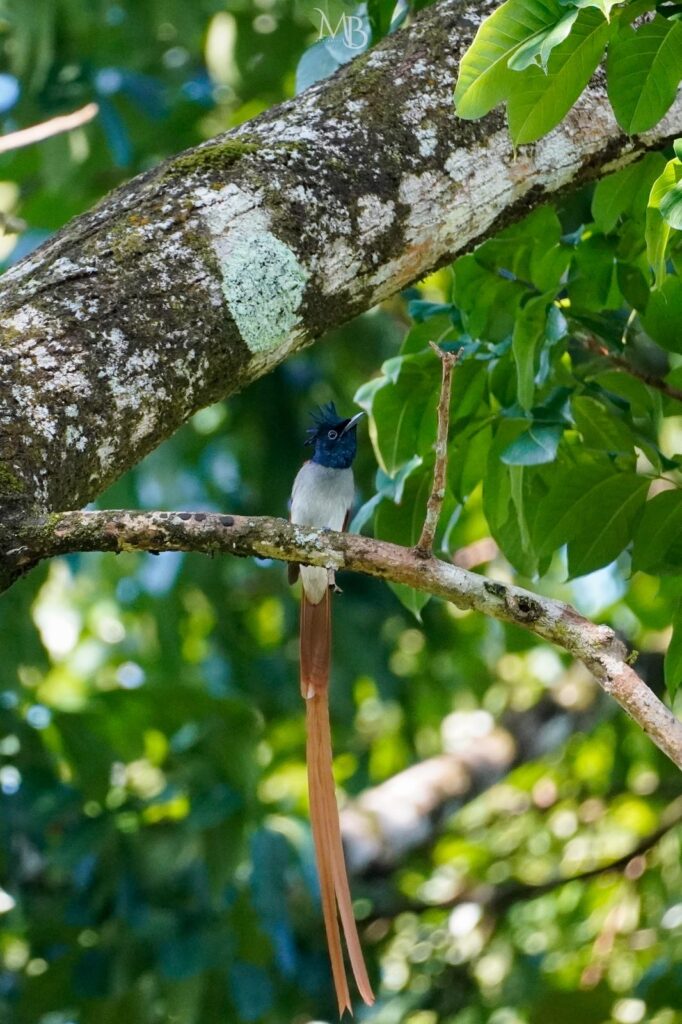
- Indian paradise flycatcher
-
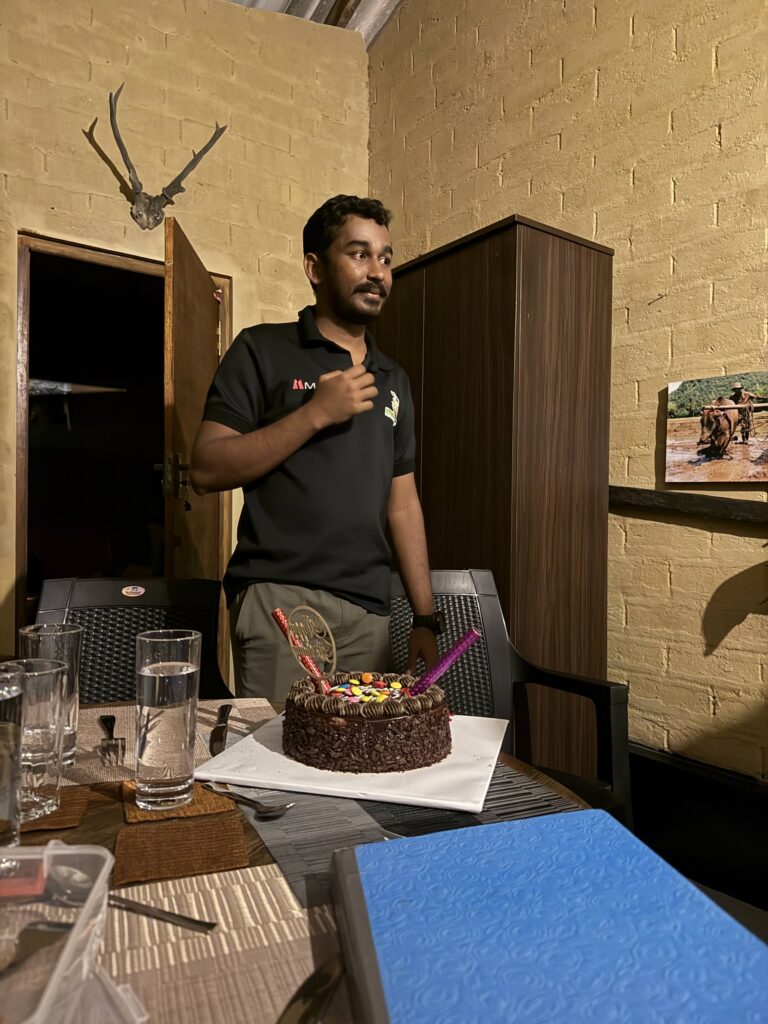
- Induja with brthday cake
-
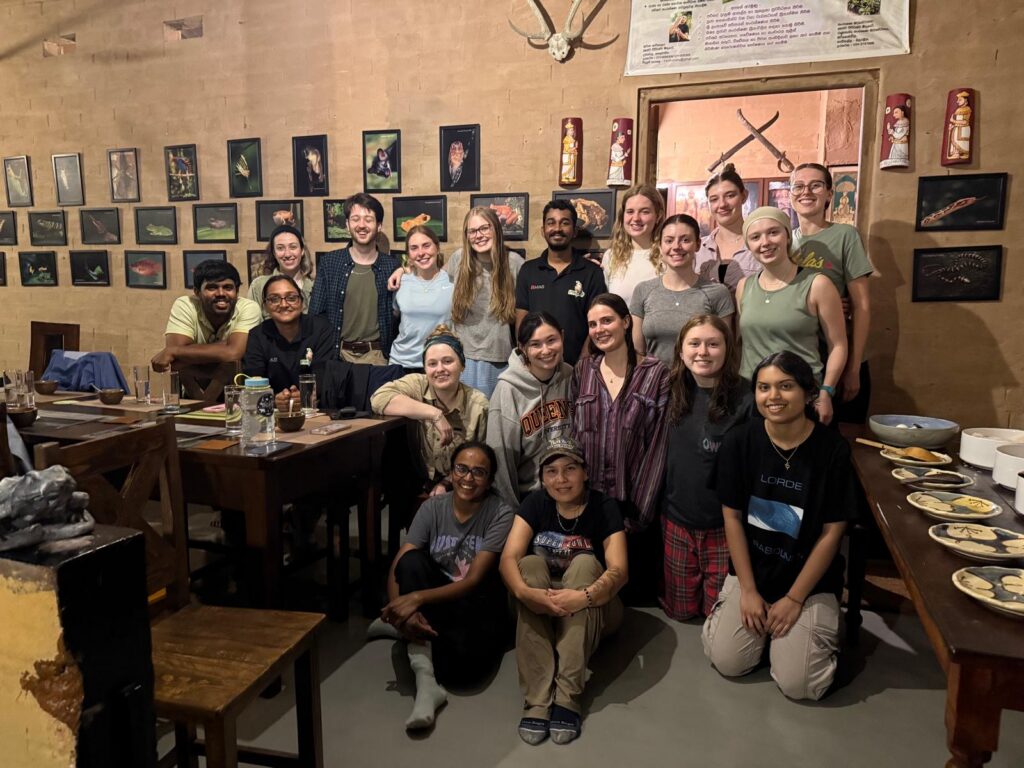
- Postprandial photo
-
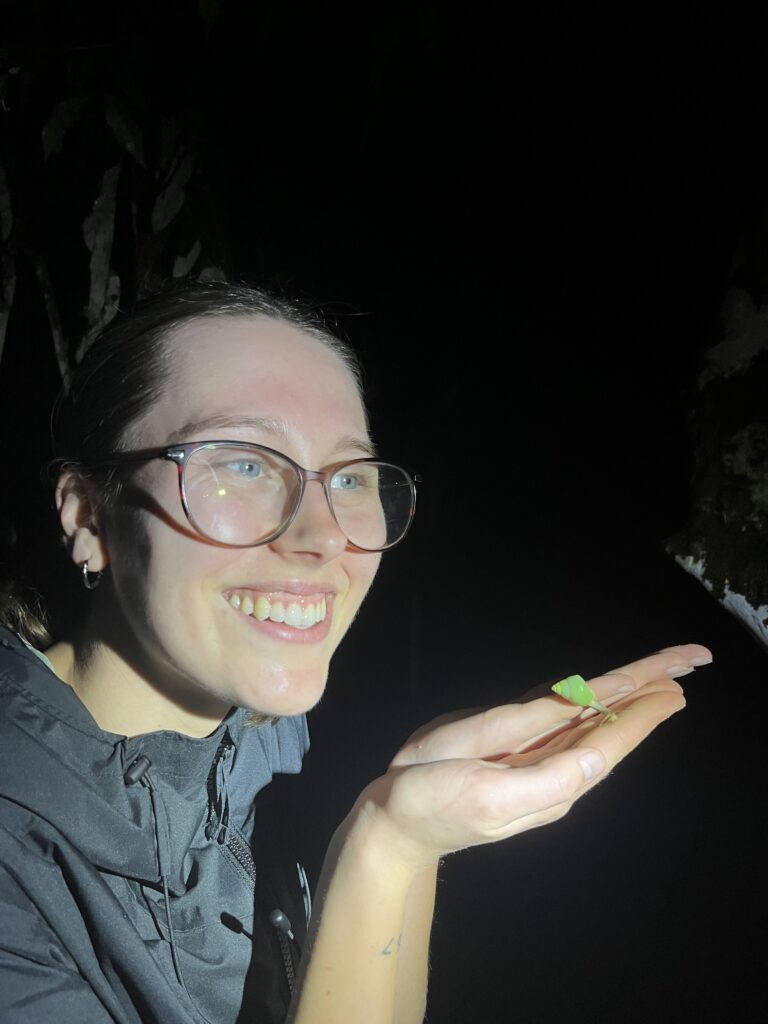
- Kirsten and a local snail small
-
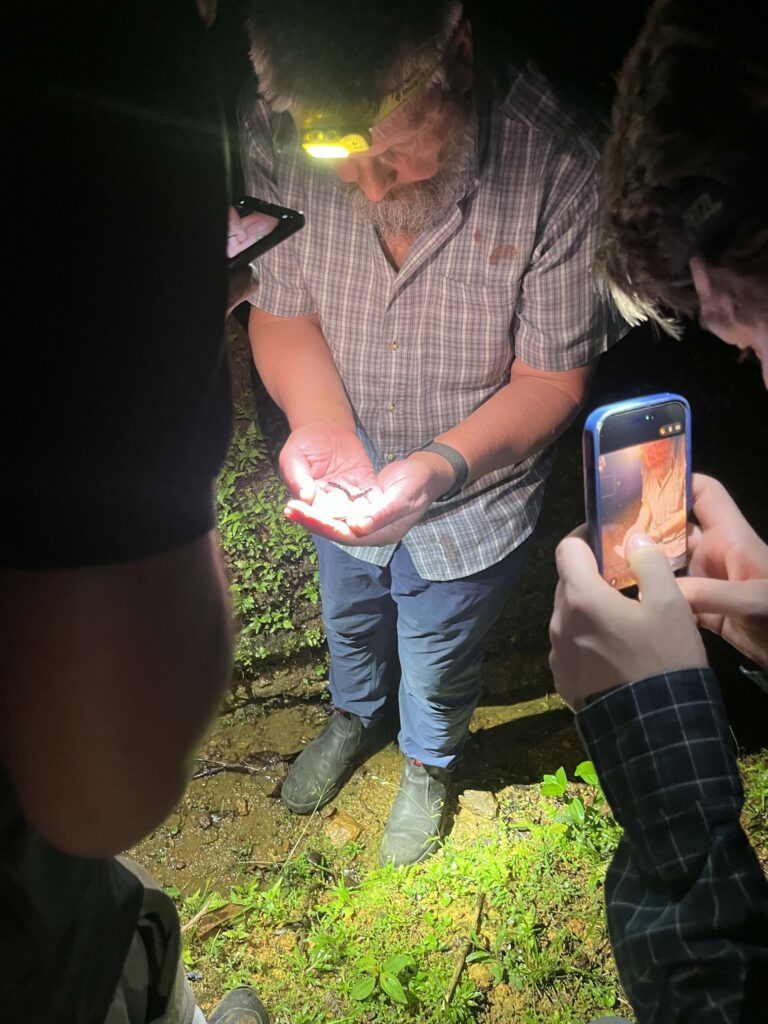
- Steve with juvenile caecilian small
Leave a Reply